Avery Schulz · 11 October 2026
Mapping Informal Endorsement Networks Among Independent Web Ventures
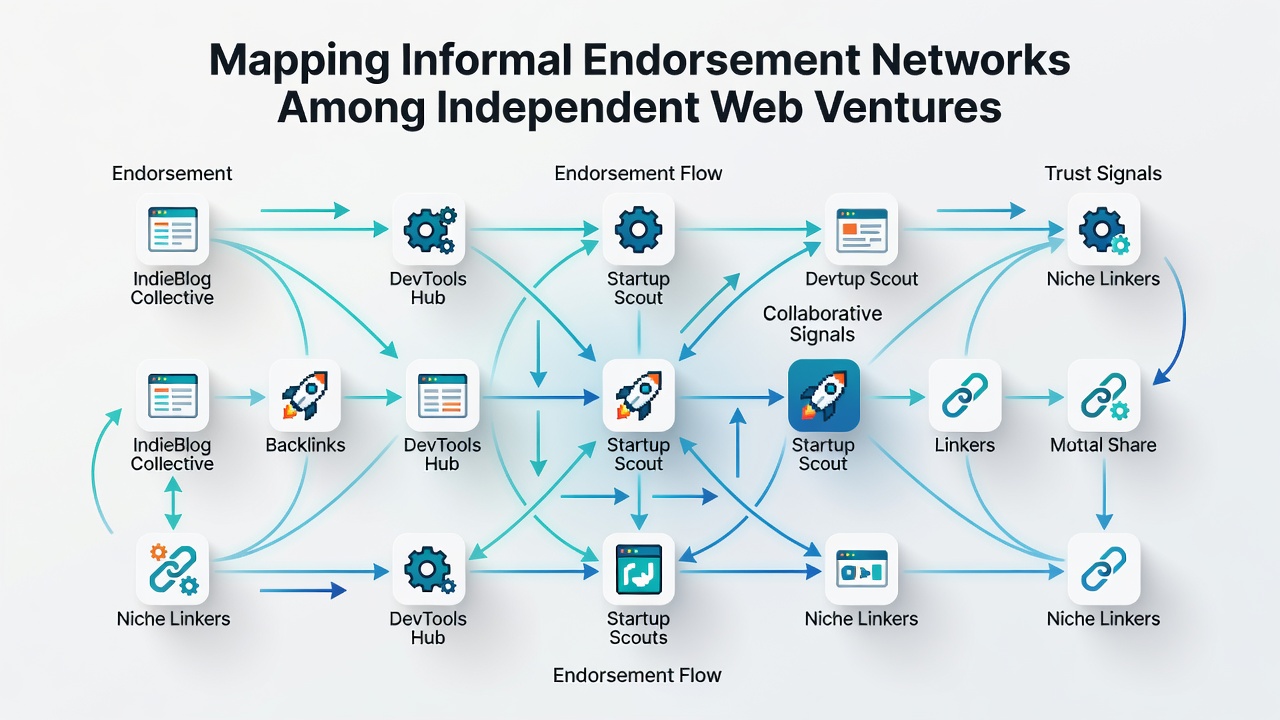
Independent web ventures create connections through mentions, shared resources, and cross-references that occur without formal agreements or paid placements, and analysts track these patterns by treating sites as nodes in a graph where each endorsement forms an edge that reveals clusters of mutual support. Data from web archive studies shows that such networks often emerge around niche topics like open-source tools, regional crafts, and specialized knowledge bases, with activity levels rising steadily through 2025 and into October 2026 as more standalone operators adopt decentralized publishing platforms.
Core Elements of Informal Endorsement Structures
These networks operate through repeated references that include hyperlinks in resource lists, guest contributions on related sites, and aggregated feeds that surface content from multiple independent sources, while researchers at institutions across different regions have applied community detection algorithms to identify tightly linked groups. Evidence from longitudinal crawls indicates that endorsements tend to concentrate within thematic boundaries, such as environmental monitoring projects or small-scale manufacturing directories, and the resulting graphs display scale-free properties where a few sites accumulate higher numbers of incoming references over time.
Data Collection Approaches
Analysts gather information by scraping public site content, monitoring RSS aggregations, and reviewing archived versions of pages to capture historical endorsement shifts, and tools such as network analysis software allow mapping of directed relationships that show which ventures endorse others more frequently. Studies conducted by Canadian research groups have examined similar patterns in digital small-business ecosystems, revealing that geographic proximity sometimes influences connection density even when sites operate in fully online formats.
One study revealed that independent ventures in creative fields maintain denser endorsement clusters than those in technical documentation areas, and the difference appears tied to content update frequency and audience overlap metrics that researchers calculate from traffic exchange data. Mapping efforts also incorporate social media cross-posts and newsletter mentions that extend beyond site-to-site links, creating multilayer graphs that capture a fuller picture of informal support.
Visualization Techniques and Analytical Tools
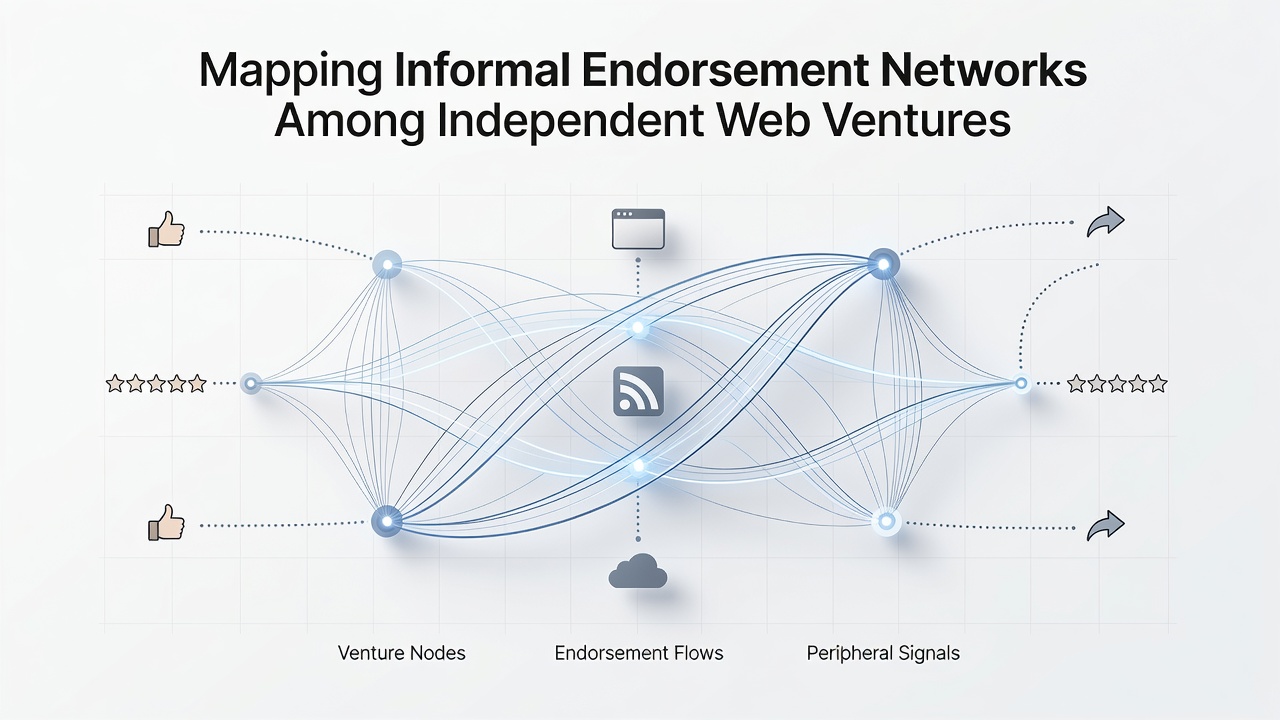
Graph layouts position high-degree nodes centrally to highlight influential ventures, while force-directed algorithms spread peripheral sites outward to clarify community boundaries, and practitioners adjust edge weights according to endorsement frequency or recency to emphasize stronger ties. Reports from the OECD on digital platform dynamics note that such visualizations help identify structural holes where new connections could form, although mapping remains observational rather than prescriptive.
Additional layers come from examining comment sections and forum threads that reference multiple independent sites, and these interactions add temporal dimensions to the networks that show how endorsements evolve after major content updates or collaborative events. Australian communications regulators have published data on small online operators that aligns with these observations, indicating consistent growth in cross-referencing activity among non-commercial and semi-commercial ventures alike.
Observed Patterns Across Sectors
Networks in the open educational resources space display higher reciprocity rates, with ventures frequently endorsing each other in rotation, whereas environmental data projects show more hierarchical structures where established repositories receive endorsements from newer entrants, and both patterns appear in crawls covering 2024 through October 2026. Analysts note that seasonal content spikes, such as annual reports or conference recaps, temporarily increase edge density before the graphs stabilize again.
Cross-regional comparisons indicate that European ventures often form broader but weaker ties compared with tighter North American clusters, a distinction drawn from aggregated link data rather than individual case judgments. Academic papers on web graph analysis continue to supply methods for scaling these mappings as the number of independent sites grows.
Conclusion
Mapping informal endorsement networks provides a factual record of how independent web ventures connect through organic references, and continued data collection through 2026 supports ongoing refinement of graph-based techniques that reveal structural characteristics without implying intent or strategy. External sources such as the OECD digital economy reports and analyses from Statistics Canada on small business digital activity supply contextual benchmarks that researchers integrate into larger studies of web connectivity.